If you manage money for a youth hockey team, you already know the math is brutal. Families in house leagues report paying a median of about $3,500 per season, and travel hockey climbs fast from there: roughly $6,500 at the A level, $9,700 at AA, and around $18,000 for AAA, according to Hockey Budget's 2026 state by state breakdown. Even the low end of their house league range, $1,400 to $4,100 per season, is real money for most families. So when the board says "let's do a fundraiser," the question that actually matters is simple: after the product costs and the volunteer hours, how many dollars land in the team account?
Two of the most popular food fundraisers in the country are Butter Braid pastries and Krispy Kreme doughnuts. Both are true product fundraisers: your supporters hand over money and get something real to eat in return, which is exactly why they work in communities where people are tired of being asked for plain donations. But they earn very differently, and they demand very different things from your volunteers. Here is an honest look at both, with the numbers, and then a look at where Donacelet fits alongside them.
Butter Braid: higher profit per item, frozen logistics
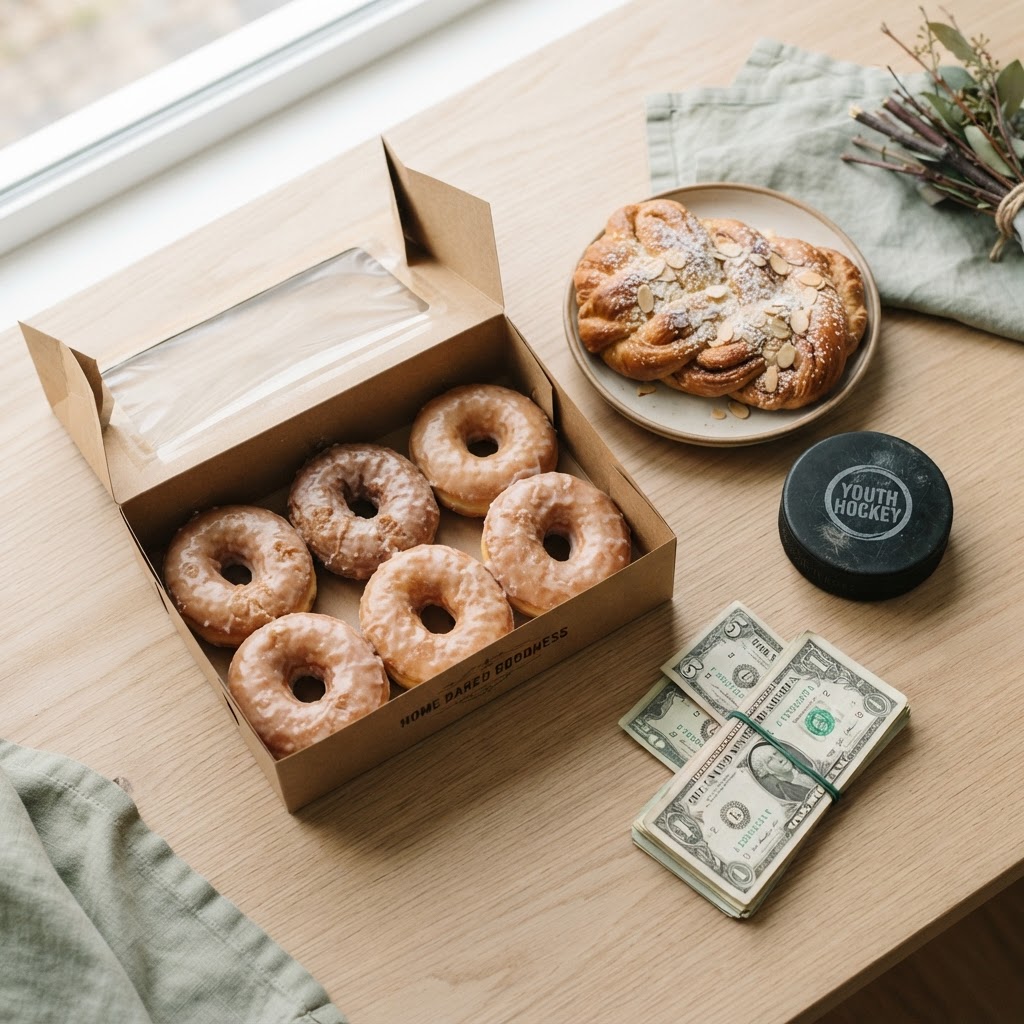
Butter Braid is a frozen braided pastry sold through a network of regional dealerships. The official Butter Braid fundraising page advertises "$6.00 per-item profit" and notes in the fine print that the actual figure depends on your local dealership, which "may receive even MORE than $6.00 per item." That is not marketing spin in this case; some dealers really do pay better. Hometown Pastries, a Butter Braid dealer, states that pastries "sell for $20 each and earn you a profit of $8.00 per item," which works out to a 40% margin.
So a realistic planning number is $6 to $8 profit per pastry, depending on which dealership serves your area. If every kid on an 18 player roster sells 15 pastries, that is roughly $1,600 to $2,200 for the team. Not bad for a two week order taking window.
The tradeoffs are logistical. This is a classic order taker fundraiser: kids collect orders and money up front, the dealer delivers the pastries frozen a couple of weeks later, and your volunteers run a distribution day. The product must stay frozen until it goes home, then supporters thaw it 8 to 12 hours and bake it themselves. That means you need freezer capacity or a tightly scheduled same day handoff, a parking lot or gym for pickup, and volunteers who can sort orders by seller. There is typically no upfront cost, which is a genuine plus, but the profit figure on the website is not guaranteed until you talk to your specific dealer, and availability depends on whether a dealership covers your region.
Krispy Kreme: familiar product, thinner and faster money
Krispy Kreme runs fundraising directly through its shops. The official fundraising page says groups "earn up to 50% of the profit," and the company's published fundraising pricing guide puts real numbers on that: Original Glazed dozens cost the group $4.50 and carry a suggested selling price of $9.00, for $4.50 profit per dozen. Chocolate Iced dozens cost $5.25 and sell for a suggested $10.50. The guide also lists fundraising certificates ($4.50 cost, $9.00 suggested price) and BOGO cards ($10.00 cost, $20.00 suggested price, so $10 profit per card), with a minimum order of 25 units to qualify for fundraising pricing. One caution: pricing varies by market and by shop, so confirm current numbers with your local store before you build a budget, a point echoed by this independent guide to Krispy Kreme fundraisers, which pegs typical group earnings at 30% to 50% and notes that doughnuts must be picked up and distributed the same day.
That same day freshness rule is the real constraint. Doughnuts do not sit in a freezer waiting for a convenient Saturday. Someone has to buy the dozens in the morning, and your team has to sell or hand off all of them within hours. It works beautifully as a one day sale outside a rink or a grocery store, and the buy in is low: at $9 a dozen, almost anyone will say yes. But the margin is thin in absolute dollars. To net the same $1,600 that a modest Butter Braid sale produces, you need to move about 355 dozens. The certificate and BOGO card options soften the logistics because there is no perishable product to handle, though redemption depends on having a Krispy Kreme shop close enough that supporters will actually use them.
Head to head verdict
On net dollars per transaction, Butter Braid wins clearly: $6 to $8 per $20 item versus $4.50 per $9.00 dozen. On volunteer effort, it is closer than it looks. Butter Braid concentrates the work in a two week sales window plus one frozen distribution day. Krispy Kreme concentrates it into a single frantic morning, or shifts it entirely onto supporters if you sell certificates and cards instead of fresh dozens. On accessibility, Krispy Kreme's $9 price point beats a $20 pastry for impulse purchases, and the brand needs no explanation.
If you can only run one, and you have the freezer space and a dealer in your area, Butter Braid is the better earner for a hockey team trying to make a dent in four figure season fees. Krispy Kreme is the better fit for a quick, low commitment event day sale, especially if a shop is nearby and you use the BOGO cards to skip the perishability problem entirely.
Where Donacelet fits
Donacelet is also a product fundraiser, but it is built differently from both of the options above. Supporters buy a $60 wristband, and that wristband comes with member only Deals Access that the supporter keeps using after your fundraiser ends. In other words, the product is not something you eat once; it is ongoing savings the buyer holds onto. Referred sales carry a 65 to 75% margin that goes directly to the fundraiser, which is roughly $39 to $45 per sale. There are no upfront costs, setup takes about 5 minutes, each fundraiser is linked to a specific team so the money goes to that team, and each wristband is paired to the supporter who buys it. You can see how teams run it at https://donacelet.org/Fundraisers.
The honest fit: hockey is exactly the kind of sport where per sale margin matters, because the fundraising targets are large. Netting $39 to $45 per sale means a team clears the same money from 40 wristbands that it would from roughly 250 Butter Braid pastries or 355 dozens of doughnuts, with no freezer day and no 6 AM doughnut run. The honest non fit: a $60 wristband is a considered purchase, not an impulse buy. Nobody grabs one on the way out of a grocery store the way they grab a $9 dozen. Donacelet works best when sellers can explain the ongoing Deals Access to family, friends, and coworkers who want to support the team anyway and would rather get lasting value than a pastry. If your team's supporter base only responds to low price impulse items, a food sale will move more units.
Plenty of teams do both: a food fundraiser for visibility and quick cash at the rink, and Donacelet for the bigger dollar asks to close the gap on season fees.
When to run what
Hockey registration bills usually land in late summer, with the biggest travel costs hitting between August and December. Work backward from that. Butter Braid needs a two week sales window plus about two weeks for delivery, so start it four to six weeks before you need the money, and remember supporters are less excited about baking in July than in October. Krispy Kreme works best tied to an event with foot traffic: tryout weekends, season opening tournaments, or holiday markets. Donacelet has no product lead time and a 5 minute setup, so it can start the same week the board realizes there is a budget gap, and it keeps working through the season since there is no perishable inventory. Whatever you choose, decide before tryouts, put one parent in charge of one fundraiser each, and set a per player goal in dollars, not items.