When Hudl acquired TeamUp in July 2026 and rebranded it Hudl Fundraising, it gave coaches and team parents a new option to consider. But for a lot of programs, the launch raised as many questions as it answered. As we wrote in our cost breakdown, Hudl has not published its fee structure, which means teams are asked to commit before they know their net.
That opacity is one reason teams look for alternatives. Others are simpler: donation-ask fatigue from supporters who are tired of being asked to give without getting anything back, a preference for product-based fundraisers where the supporter receives something tangible, or a desire for a platform that does not require athletes to hand over their personal contact lists.
This comparison looks at seven alternatives across four criteria: platform fees and net-to-team percentage, what supporters actually get, payout speed, and the effort required from coaches and volunteers. Where a platform has not published its numbers, we say so. The goal is a genuinely useful starting point, not a sales pitch.
1. FlipGive
FlipGive is a cash-back shopping platform. Supporters shop at participating national brands through the team's FlipGive page, and a percentage of each purchase goes back to the team. It markets itself as free to join with no selling required.
How the money works: FlipGive takes a cut of each transaction and passes the rest to the team, with earn rates typically ranging from 1% to 25% depending on the retailer. There is no published flat percentage the team keeps across the board, because it varies by merchant. Best-fit team type: teams with engaged parent communities who already shop online regularly and are willing to route purchases through the app.
Drawback: because earnings are a percentage of everyday spending, raising a meaningful amount requires either a large roster of active shoppers or high-ticket purchases. It works best as a passive supplement, not a primary fundraiser.
2. Snap! Raise
Snap! Raise is a donation-based platform popular with high school and youth sports programs. It runs short, time-bound campaigns where athletes reach out to their networks, and the platform handles the digital collection, athlete pages, and social sharing.
How the money works: Snap! Raise has historically retained a portion of each donation plus card processing fees, and it funds athlete incentives and prizes from that share. The exact percentage the team keeps is not published as a single figure and can vary by program, so teams should ask a rep for the full breakdown before committing. Best-fit team type: large programs with 30-plus athletes who each have willing donor networks, where a gamified leaderboard drives engagement.
Drawback: the model depends on athletes sharing personal contact lists, and families have raised questions about how those contacts are stored and used. Donation drives also produce supporter fatigue faster than product fundraisers, because the supporter receives nothing tangible in return.
3. RallyUp
RallyUp is a flexible fundraising platform that supports donation campaigns, raffles, sweepstakes, auctions, and peer-to-peer events. It is less sports-specific than Snap! Raise or Vertical Raise, which makes it a fit for clubs and community groups as well as teams.
How the money works: RallyUp charges platform and processing fees that vary by campaign type and payout method, and it offers a free and a paid tier. Because fees are layered and campaign-dependent, teams should run their specific scenario with a rep or through the pricing page before projecting net. Best-fit team type: groups that want to run multiple fundraiser formats in one place and have a volunteer willing to learn the platform.
Drawback: the flexibility that makes RallyUp powerful also means more setup decisions, and net percentages are not as straightforward as a fixed per-unit split. It rewards a coordinator who is willing to dig into the details.
4. Vertical Raise
Vertical Raise is a donation-based platform similar in structure to Snap! Raise, built around short digital campaigns where athletes email and text their networks. It is widely used in youth and high school sports.
How the money works: like Snap! Raise, Vertical Raise retains a share of donations plus processing fees, and it provides athlete incentives from that share. The exact percentage kept by the team is negotiated per program and not published as a single rate, so teams should confirm the full fee structure in writing. Best-fit team type: mid-to-large sports teams that want a fast, managed campaign and have athletes willing to share contacts.
Drawback: the same contact-sharing and donation-fatigue concerns apply. Two similar teams can end up with different effective rates depending on what they negotiate, which makes apples-to-apples comparison difficult without asking each rep directly.
5. Double Good
Double Good is a virtual popcorn fundraiser. Players share a link to an online store for a short window of usually four days, orders ship directly to buyers, and the team keeps a fixed share.
How the money works: Double Good publishes a 50% profit share with no fees, minimums, inventory, or upfront costs. That transparency is a real advantage over platforms that do not publish their split. Best-fit team type: any team that wants a low-effort, low-risk product fundraiser and has supporters willing to pay gourmet-popcorn prices.
Drawback: gourmet popcorn is priced well above grocery store snacks, and because the fundraiser is easy to run, many teams in a given area use it, which means supporters may already be saturated. It is a great secondary fundraiser but rarely a primary one for teams with large goals.
6. Butter Braid
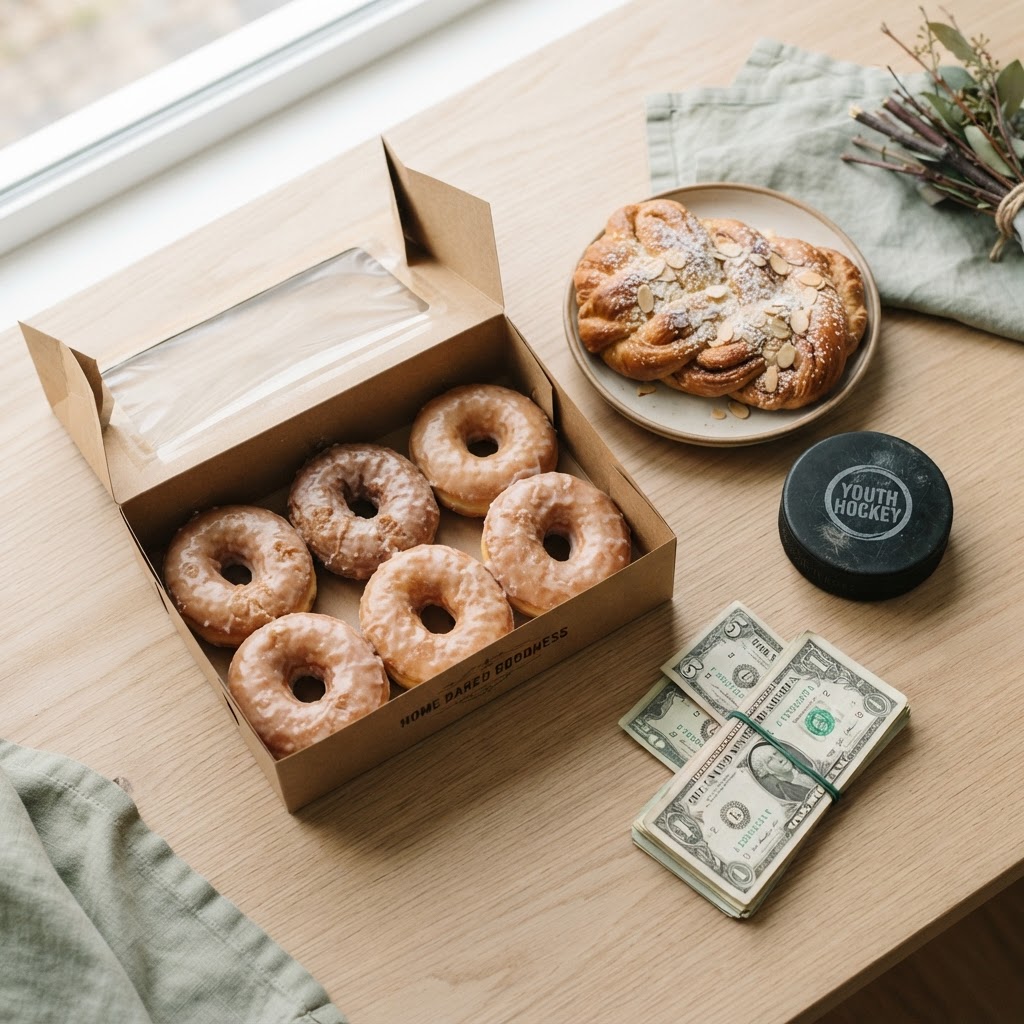
Butter Braid is a frozen pastry product fundraiser sold through a network of dealers. Players take orders, product is delivered frozen, and the team distributes to supporters.
How the money works: Butter Braid dealers typically publish profit percentages in the range of 40% to 50% per item, though the exact rate depends on the local dealer and order volume. There are no published national averages, so teams should get a quote from their local dealer. Best-fit team type: teams with a volunteer who can manage a delivery day, and a supporter base that responds to a tangible, popular food product.
Drawback: frozen product means a real delivery-day logistics burden. Someone has to coordinate a pickup window, chase families who do not show up, and handle coolers if anything slips. The margin is solid; the labor lands on one or two volunteers.
7. Donacelet
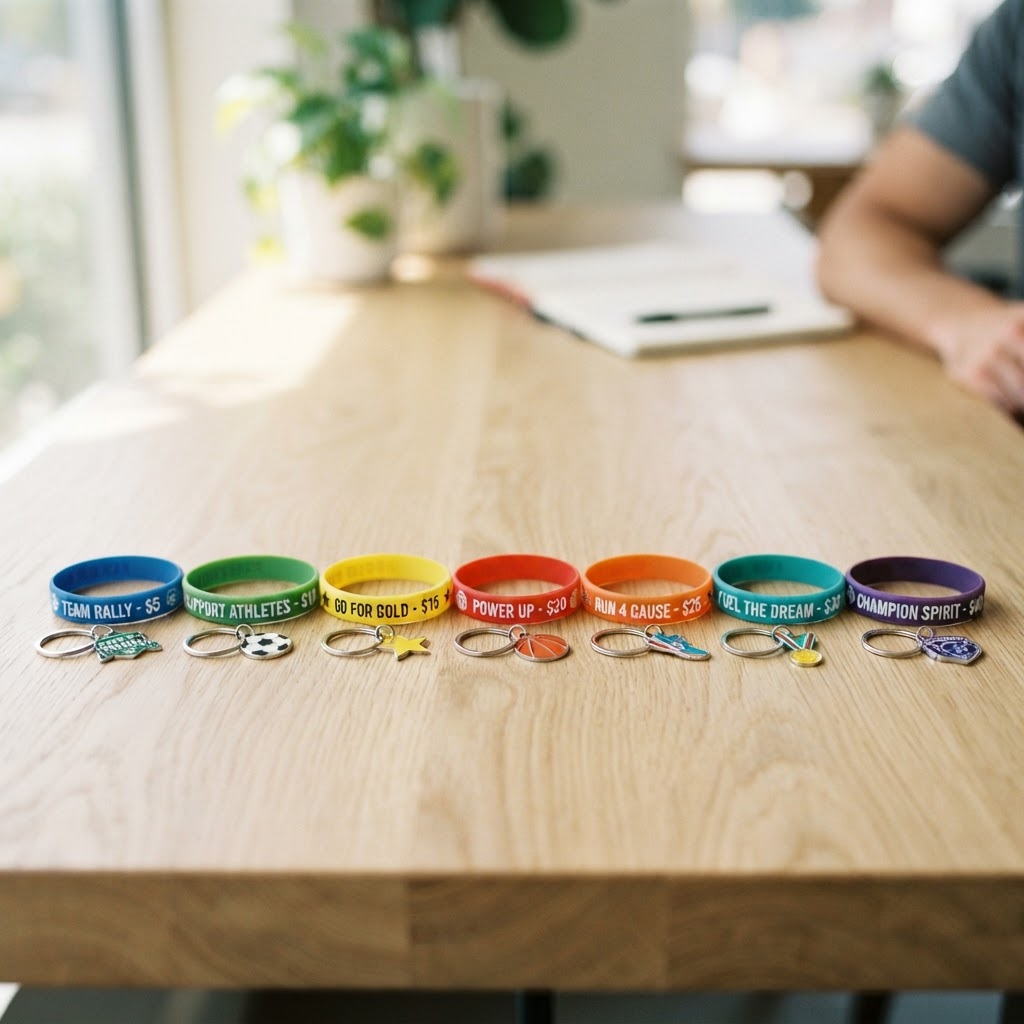
Donacelet is a product-based fundraiser built around an NFC wristband, keychain, or virtual support code. Supporters buy through your team's fundraiser page and receive member-only Deals Access, unlocking savings at over a million places to save, including 700-plus national brands. Your team keeps 65-75% of every referred sale, with no platform fees deducted.
How the money works: supporters choose a $60 wristband or keychain (with 6 months of Deals Access), or a $100, $60, or $30 virtual support code for shorter access periods. There are no upfront costs, setup takes about five minutes, and each fundraiser is linked to a specific team so the money goes where supporters intend. You can see how it works here. Best-fit team type: teams facing meaningful per-player costs who want a keep-margin-per-sale approach rather than a high-volume one, and whose supporters respond to real value rather than a donation ask.
Drawback: Donacelet is a newer platform with a smaller deal network than legacy consumer-discount services. The $60 price point is also a bigger ask than a $2 chocolate bar, so it works best with supporters who want to give meaningfully rather than casual passersby.
Comparison at a glance
| Platform | Model | Typical % kept by team | Supporter gets | |----------|-------|----------------------|----------------| | FlipGive | Cash-back shopping | 1-25% per purchase | Same product they were buying | | Snap! Raise | Donation-based | Not published (negotiated) | Nothing tangible | | RallyUp | Donation/raffle/auction | Varies by campaign | Varies by campaign type | | Vertical Raise | Donation-based | Not published (negotiated) | Nothing tangible | | Double Good | Virtual popcorn | 50% | Gourmet popcorn | | Butter Braid | Frozen pastry | ~40-50% | Frozen pastries | | Donacelet | NFC product + deals | 65-75% | Wristband/keychain + Deals Access |
How to choose
Start with your team size and your season timeline. A small roster of 12 families cannot rely on a volume-based model the way a 40-player football program can; for small rosters, a higher-margin-per-sale product like Donacelet or a discount card will outperform a donation drive that needs dozens of contacts per athlete. Larger programs with deep networks can make donation-based platforms like Snap! Raise or Vertical Raise work, provided they are comfortable asking athletes to share contact lists and they get the net percentage in writing before committing.
Season timing matters too. If you are fundraising before a season starts, when families have just seen the fee invoice and motivation is high, a short campaign or a product push will land well. If you are trying to fundraise mid-season when families are living out of hotel rooms, keep it simple and low-effort. Double Good's four-day window or a passive FlipGive page requires almost no volunteer bandwidth, while a Butter Braid delivery or a managed donation event demands a coordinator.
Finally, weigh transparency against effort. A platform that publishes its split lets you calculate your net before you start, which means you can set a realistic goal and tell supporters exactly how their purchase helps. A platform that does not publish its numbers may still be well-priced, but you should insist on seeing the full fee structure, including processing and incentive costs, before you sign.
Frequently asked questions
Is Hudl Fundraising free?
Hudl has not published pricing for Hudl Fundraising as of July 2026, so it is unclear whether there is a platform fee, what percentage the platform retains, or how processing is handled. Teams should ask a rep for the full structure in writing.
What percentage do fundraising platforms take?
It varies widely by model. Product fundraisers typically publish a fixed split, like Double Good at 50% or Donacelet at 65-75%. Donation-based platforms like Snap! Raise and Vertical Raise negotiate per program and rarely publish a single rate. Cash-back platforms like FlipGive vary by merchant.
What is the best fundraiser for a small team?
Small rosters benefit from higher-margin-per-sale products, because they need fewer transactions to reach a goal. Donacelet, discount cards, and scratch cards all work well for teams of 12 or fewer families. Volume-based and donation-outreach models need larger rosters to generate enough contacts.
Are donation-based or product-based fundraisers better?
Neither is universally better. Product fundraisers give supporters something tangible, which reduces ask fatigue, and they usually publish a fixed split. Donation-based drives can raise money quickly with no inventory, but they depend on athletes sharing contacts and produce faster supporter fatigue because the donor receives nothing.
How fast do teams get paid?
It depends on the platform. Some donation platforms hold funds until the campaign closes plus a processing window. Donacelet processes payouts quickly, often instantly, through bank transfer, PayPal, Venmo, Cash App, or gift card. Always confirm the payout timeline before you commit.
Ready to see if Donacelet fits your team? Start your fundraiser in about five minutes, or book a demo and we will walk you through the math for your roster and goal.