The Funding Picture Going Into This Fall
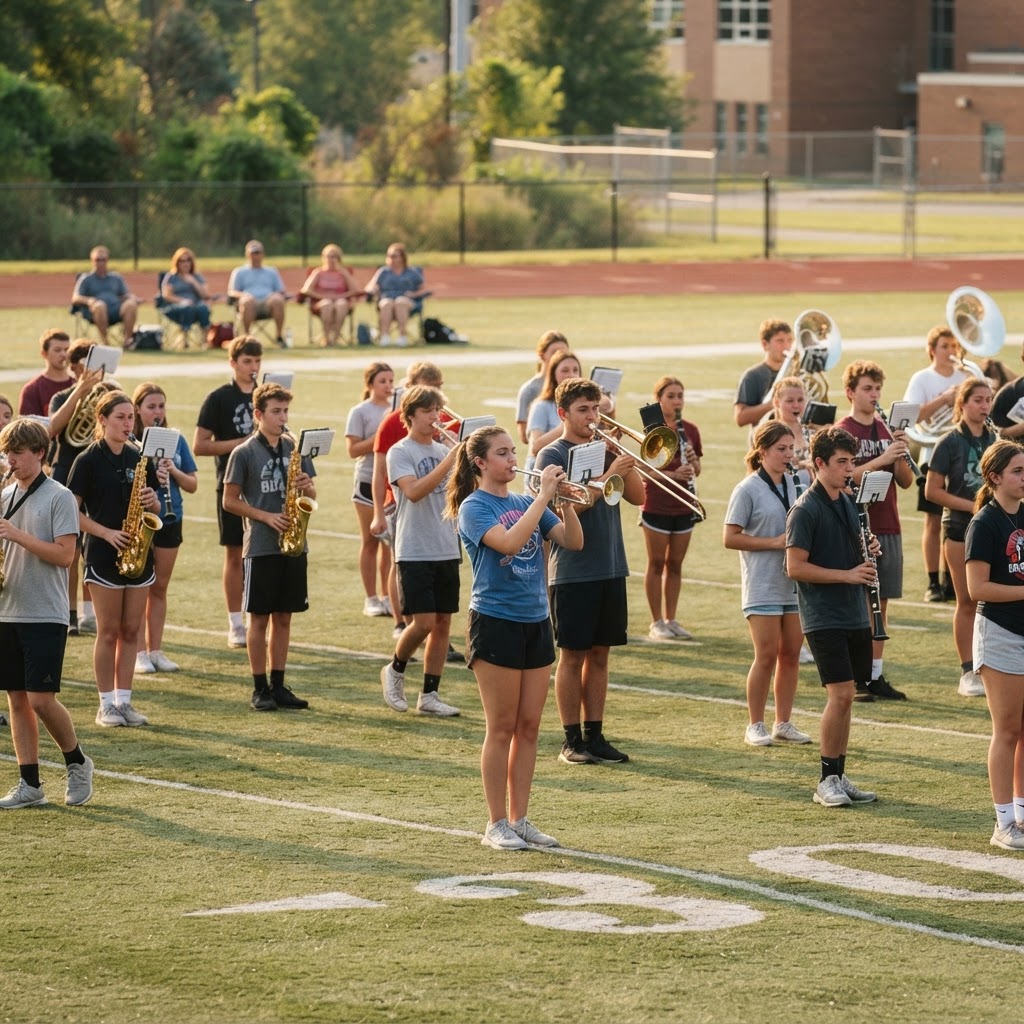
Marching band season is in full swing, competition schedules are set, and a lot of directors and booster boards are looking at the same problem: the money is harder to find than it used to be. The headline news from Washington was actually good. In February 2026, Congress passed a Labor, Health, and Education spending bill that preserved federal arts education funding for the year, including roughly $18.4 billion for Title I, $1.4 billion in flexible Title IV, Part A grants that districts can spend on a well rounded education, and $36.5 million specifically for the Assistance for Arts Education program. Earlier proposals had called for cutting the Department of Education by about $12 billion and eliminating the dedicated arts program outright. Advocates pushed back, and most of those cuts did not happen.
That is the part worth celebrating. The part worth planning around is everything happening below the federal line.
The Federal Win Did Not Reach Every Program
Even with the national numbers holding, individual grants and local budgets tell a rougher story. Several arts organizations that had counted on National Endowment for the Arts money saw those grants canceled during the year. One community music nonprofit lost a $30,000 grant and had to lay off staff and cut a school based program. Another lost $25,000 that funded student work with a professional orchestra. These are not line items in a federal chart. They are the actual programs kids show up to.
School districts are where the pressure is most direct. In California, the West Contra Costa Unified School District is working through a deficit of more than $127 million over three years and has approved eliminating band and orchestra at all of its elementary schools, along with up to 21 arts teaching positions. Richmond High School, whose music program grew from 7 students to more than 200 over a decade, now faces a shrinking feeder pipeline because younger students will not be able to start an instrument until middle school. A director there put it plainly: when elementary music disappears, learning an instrument becomes something only families who can pay for private lessons can do.
That is the quiet cost of every budget cut. It does not just trim a program. It shifts the bill onto families, and it turns participation into a question of who can afford it.
What This Means for the Cost of Participation
Families are already carrying a lot. A single high school marching band fee commonly runs around $500 for the season, and that is before shoes, a competition trip, meals on the road, and instrument maintenance. One North Carolina program spreads its $500 fee across four payments from May through September and offers a reduced rate for siblings, which tells you how many households need the help. Add registration, travel to competitions, facility rentals, and uniform replacement across a full activity calendar, and the number a family faces can climb fast.
When district money gets tighter, that per family number goes up. Booster clubs end up covering gaps that used to be someone else's responsibility, and the pressure to fundraise more, from the same community, gets heavier every season. The math problem is real: raise more without asking the same families to keep writing bigger checks.
Why the Old Fundraiser Playbook Struggles Here
This is exactly the moment when weak fundraising options fail a group. Selling raffle tickets asks supporters to hand over money and get nothing they actually want in return, and the group keeps only a slice after prizes and costs. In a year when families are watching every dollar, that is a hard sell, and it burns goodwill you will need again in the spring.
The better model gives supporters something with real, ongoing value and keeps far more of every dollar in the program. That is the gap Donacelet is built to fill.
How Donacelet Changes the Math
Donacelet is a deals and fundraising platform. A supporter buys a wristband or keychain for $60 through your group, and that purchase includes 180 days of Deals Access to the Donacelet Deals Marketplace, featuring 700+ national brands. Instead of a raffle ticket that gets thrown away, the supporter gets member-only savings they can use on real purchases for months. The value stays with them, which makes the ask easier and makes people want to buy again.
For the group, the economics are strong. On referred sales, your team earns up to $40 on every $60 purchase. If you sell in person at wholesale, units are available at $15 each for orders of 100 or more, and your group can sell them for up to $60, which works out to as much as a 75 percent margin. Every fundraiser is linked to the specific team or group that runs it, so the money goes where it is supposed to go, straight to your band, your booster club, your program.
Compare that to a $500 family fee. A single booster club that moves 100 wholesale wristbands can clear meaningful money in one push, without asking any one family to shoulder it. And because the wristband is paired to the supporter and carries 180 days of Deals Access, the person who buys it feels like they got something, not like they just donated to a cause and walked away empty handed.
A Practical Move for the Next Few Weeks
You do not need to wait for the next budget cycle to react. If your program is staring at a shortfall this fall, here is a simple sequence. Set a clear team goal tied to a real number, such as the total in participation fees your families are being asked to cover. Launch a linked Donacelet fundraiser so every sale is credited to your group. Lean on referred selling to reach relatives and supporters who do not live nearby, since they can buy online and still get their Deals Access. For your core in person push, use wholesale pricing to capture the bigger margin at events you already have on the calendar, like a home game or a competition you are hosting.
The point is not to add one more thing to an overloaded booster board. It is to replace low value fundraisers with one that returns more per hour of volunteer effort and leaves supporters glad they took part.
The Bottom Line
The federal picture held for 2026, but that is cold comfort to a program watching its elementary feeder disappear or its grant get canceled. Funding pressure is landing at the local level, and it is landing on families through higher fees. Fundraising groups that keep leaning on raffle tickets and low margin sales are going to feel that squeeze the hardest.
Groups that give supporters lasting value and keep more of every dollar are the ones that will protect their season. If your band, booster club, school group, or community organization is ready to raise more without asking your families for more, start a fundraiser today at donacelet.org.