
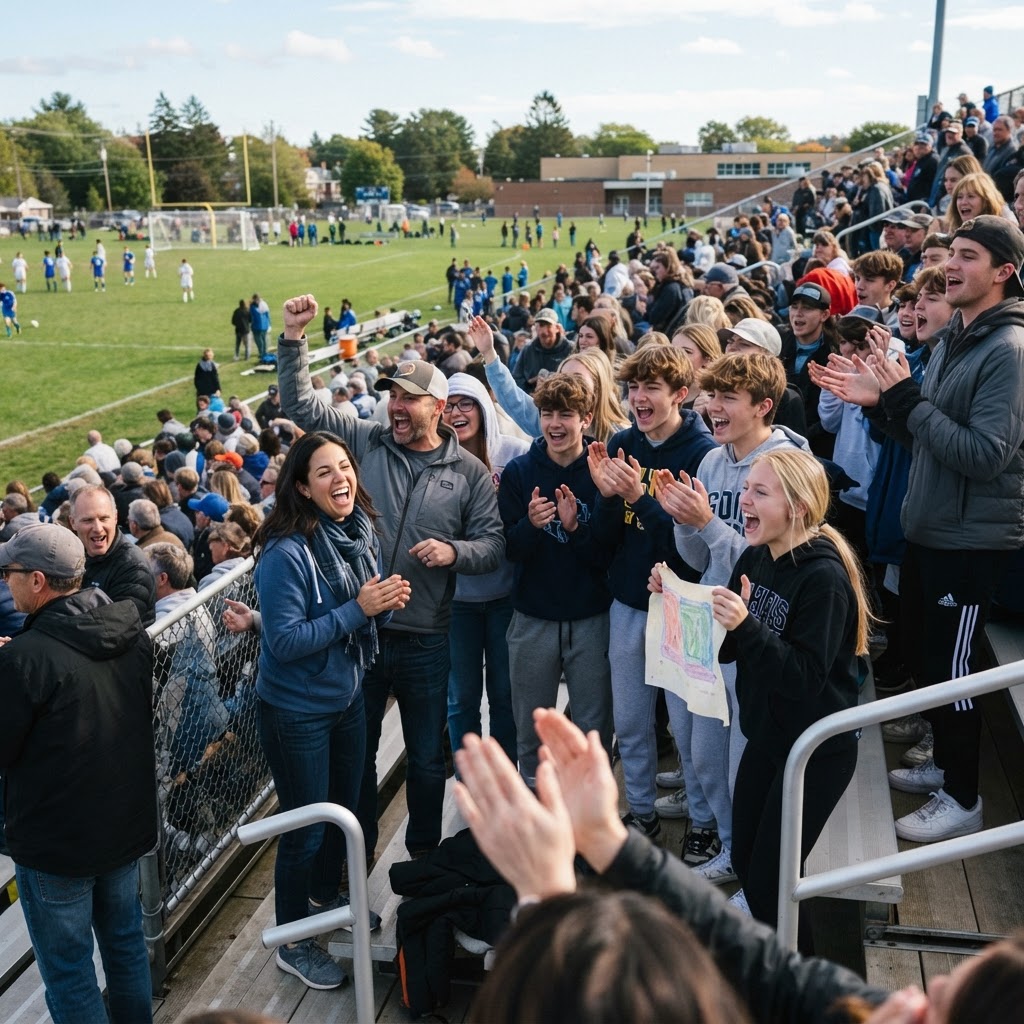
The 2026-27 Budget Squeeze Is Reaching the Field and the Stage
Districts across the country are opening the 2026-27 school year with less money, and the programs students love are on the chopping block. In Hamden, Connecticut, a $3.5 million deficit has pushed the district to cut all middle school sports and freshman basketball. In West Orange, New Jersey, a $13.5 million shortfall has put every middle school sport on the elimination list. Wyoming is absorbing an 8.4 percent statewide reduction in school funding. In Pender County, North Carolina, an 8 percent cut to Title I funding, at a time when those program costs rose 20 percent, helped open a $1 million gap on a $33.7 million budget, reported at the end of July.
The pattern is consistent, and it matters to anyone who runs a team, a club, a band, or a parent group. Sports and activities usually make up less than 3 percent of a district's budget, yet they are often the first line items cut when the math gets hard. When that happens, the programs do not simply vanish. The cost of keeping them alive shifts onto families and onto the booster clubs, PTAs, and parent organizations that stand behind them.
Cutting a Program Does Not Make Its Cost Disappear
When a district drops a sport or an activity, the bill moves rather than ends. Someone still has to cover officials, transportation, facility fees, and uniforms. Increasingly, that someone is a parent group passing a hat or a family writing another check.
The most common stopgap is a pay-to-play fee, and families are already stretched. Even before these cuts, the cost of youth activities had climbed sharply. Families now spend an average of $1,016 per child on a single sport, up from $693 in 2019, and registration fees alone have risen from $125 to $197 over that same period. Layer a new district activity fee on top of that, and participation starts to fall, usually among the families who can least afford to pay. The National Federation of State High School Associations has said plainly that it prefers corporate support and fundraising over charging students and their families to play.
That is the real question facing organizers this fall. The money has to come from somewhere. The choice is whether you raise it in a way that adds to the burden on families or in a way that gives something back to them.
Why the Usual Fundraiser Falls Short Right Now
Two familiar options make this moment harder, not easier. The first is simply asking families to donate more. In a year when households are already covering higher registration costs and, in many districts, brand new activity fees, another straight appeal competes with bills that are already on the table.
The second is selling something with almost no value to the buyer. Raffle tickets are the clearest example. You ask a supporter to hand over money for a slip of paper and a small chance at a prize, and they walk away with nothing they can use. That is a hard sell in any year, and it is a much harder one when families are watching every dollar.
Groups that will actually close the gap this fall are the ones that give supporters real value in exchange for their support, so the decision stops being charity versus budget and becomes a smart purchase that also funds the cause.
A Way to Fund the Gap That Helps Families Instead of Taxing Them
This is the exact problem Donacelet is built to solve. A supporter buys a wristband or keychain, or a virtual support code, through your group, and in return they receive member-only Deals Access to the Donacelet Deals Marketplace, featuring more than 700 national brands. Instead of paying a fee and getting nothing back, the family gets a tool that saves them money on brands they already shop, right through the school year and the holidays.
The economics work in your favor at the same time. For online, referred sales, your group can earn up to $40 on each $60 purchase, so most of what a supporter pays comes straight back to the program. For in-person selling at games, concerts, and registration nights, wholesale pricing lets you buy units at $15 each when you order 100 or more, then sell them for up to $60, a margin of up to 75 percent. Every dollar is linked to the specific team or group running the fundraiser, so the money stays with the program that needs it rather than disappearing into a general fund.
Compare that to a candy bar that nets a dollar or a raffle that leaves supporters empty-handed. When a district cuts your line item, you do not have the luxury of a low-margin fundraiser that also annoys your families.
Three Steps to Cover a Cut Before the Season Starts
- Size the gap and set a real number
Add up exactly what the cut removed: officials, transportation, facility fees, and uniforms for the season. Turn that into a unit goal. At up to $40 per referred sale, a $4,000 gap is roughly 100 supporters. At up to $60 per wholesale unit sold in person, it is fewer. A concrete number keeps your team focused and shows families precisely what their support pays for.
- Run both selling channels at once
Use referred online sales to reach the wider circle of grandparents, alumni, and friends who cannot make it to events, and use wholesale units for face-to-face selling at your first games and at registration tables. Running both at the same time is how you hit a larger goal quickly rather than leaning on one small stream.
- Lead with value, not guilt
Tell families the truth: the district cut the program, the season still costs money, and this is a way to fund it that also puts savings back in their pocket for the next 6 months. That message lands far better in a tight budget year than an appeal built on obligation, and it protects you from the donor fatigue that sinks so many fall campaigns.
Do Not Wait for the Next Board Meeting
School budgets are not getting easier, and the districts making cuts this summer are unlikely to reverse them by fall. The programs that survive a lean year are usually the ones whose booster clubs and parent groups got organized early and funded the gap themselves. You do not have to choose between keeping a program alive and adding another cost to already-stretched families.
You can set up a fundraiser in minutes. Start at donacelet.org, pair your wristbands, link your group, and give your supporters a reason to say yes that also helps their own budget this season.