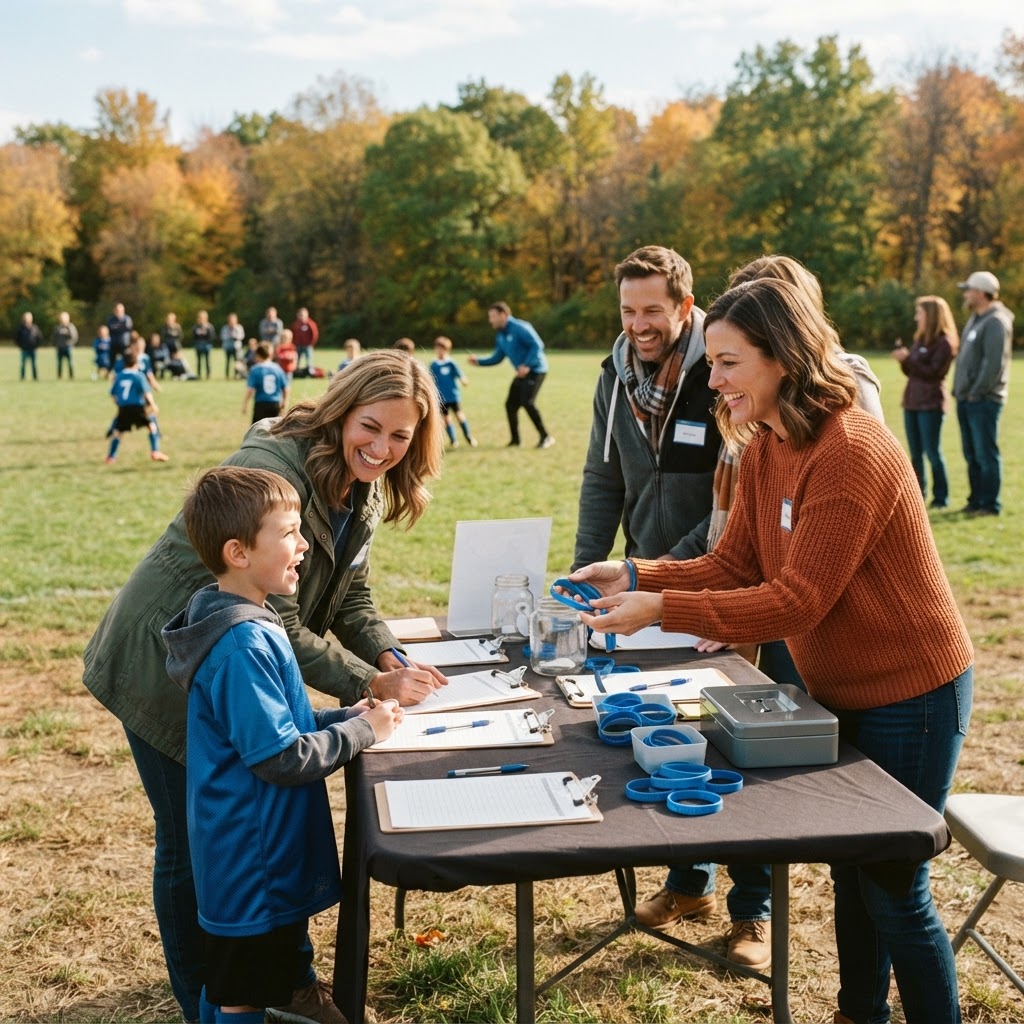

August is the most valuable month on the fundraising calendar, and most groups let it slip by. Families still have flexible schedules, everyone is thinking about the season ahead, and wallets have not yet been drained by registration and travel. Wait until the first week of practice and you are competing with packed calendars, homework, and burnout. Launch now and you set the tone for the whole season.
This is a practical, week-by-week plan any group can run: youth sports teams, schools, booster clubs, PTAs, clubs, charities, and community organizations. It works whether you are raising money for one team or funding a program that serves hundreds.
Why the timing matters this year
The math behind youth sports keeps getting harder for families. A recent Project Play survey found that the average family spent about $1,016 on a child's primary sport in 2024, a 46 percent jump over five years and roughly double the rate of inflation. Add a second activity and total spending per child climbs toward $1,500 a year. Those numbers come from registration, travel and lodging for away competition, facility fees, and uniforms, the same broad costs that stretch budgets for schools, clubs, and nonprofits too.
That pressure cuts two ways. It means your group needs to raise more, and it means the families you are asking are already feeling squeezed. The answer is not to ask harder. It is to run a fundraiser that gives supporters something real in return, so the ask feels like a win rather than a favor.
The 6-week timeline
Fundraising coaches who track results consistently point to a 6 to 8 week runway before your first practice, with the active selling window kept short. Campaigns that drag past three weeks lose momentum after the first few days. Here is how to structure it.
Weeks 6 and 5: Set the goal and pick the format
Start with a real number, not a vibe. Add up what the season actually costs (registration, travel, facility time, uniforms) and divide by the number of participants to get a per-person target. Groups that set a clear per-athlete goal commonly raise between $300 and $800 per participant. A 25-person team aiming for $450 each is a realistic $11,250 campaign.
This is also when you choose what you are selling. Skip anything with thin margins or a product nobody wants. Raffle tickets are the classic trap: supporters hand over money, most get nothing back, and your group nets a sliver after prizes and printing. A membership product changes the equation because the buyer keeps something of lasting value.
Week 4: Build your lists and your captains
Recruit a small leadership group, ideally three people: a lead organizer, a communications person, and someone tracking the numbers. Then build your contact lists. Every family should write down 10 to 20 people who want them to succeed: grandparents, neighbors, coworkers, former coaches. This list is the single biggest predictor of how much you raise.
Week 3: Set up your fundraiser and write your scripts
Get your campaign ready to go before you announce it. With Donacelet, you create a fundraiser that is linked to your specific team or group, so every dollar goes to you and not into a shared pool. Draft the short message families will send, one for texts and one for social posts, and keep the ask concrete: what you are raising for, the goal, and the deadline.
Week 2: Kick off and sell
Hold a brief kickoff, 20 to 25 minutes is plenty, and focus on the why. Then open the campaign and keep it to about two weeks. Post a daily scoreboard at the same time each day so momentum stays visible. Short, accountable, and loud beats long and quiet every time.
Week 1 of practice: Close it out and say thank you
End on the date you promised. Send personal thank-yous fast, report the total back to every supporter, and celebrate the group that hit its number. A clean finish is what makes people say yes again next season.
How the Donacelet model pays off
Here is where the return-for-the-supporter idea becomes real numbers. A supporter buys a wristband, keychain, or virtual support code, and your group earns up to $40 on every referred sale. That is a margin most product fundraisers cannot touch, and the supporter is not left empty-handed.
In exchange for that $60, the buyer gets member-only Deals Access to the Donacelet Deals Marketplace, featuring more than 700 national brands. Each wristband is paired to unlock 6 months of Deals Access, so the savings can more than cover what they paid. Instead of a raffle ticket that goes in the trash, your supporter walks away with something they will actually use, which makes them far more likely to buy again and to tell a friend.
If your group prefers to sell in person, wholesale pricing is available at $15 per unit for orders of 100 or more. You can sell those units for up to $60 each, which works out to as much as a 75 percent margin. Many groups run both at once: online referrals to reach the wider network of family and friends, and in-person wholesale at games, practices, and community events.
Put it together and a modest campaign clears real money. Sell 100 wristbands through referrals at up to $40 each and that is up to $4,000 for your team, from a two-week push that gave every buyer genuine value.
A few things that separate the groups who hit their goal
The groups who succeed do not necessarily work harder, they just avoid the common mistakes. They set a specific dollar goal instead of a hopeful one. They keep the selling window short. They sell something supporters are glad to own rather than something they feel obligated to buy. And they thank people quickly and report results, which turns a one-time campaign into an every-season habit.
August will not wait. If you want your fall season funded without begging tired families for donations, the time to build the plan is now, while schedules are still open and everyone is excited for what is ahead.
Start your fall fundraiser today
You can have a fundraiser linked to your team or group and ready to share in an afternoon. Set your goal, build your list, and give your supporters something worth buying. Start your fundraiser at donacelet.org and make this the season your group finally hit its number.