
The bills for fall do not wait. Registration windows close, uniform orders get placed, and facility deposits come due, usually in the same three or four weeks. If your group waits until the season starts to think about money, you are already behind. August is the month to fix that.
Here is a practical plan to get a fundraiser live before the whistle blows, plus the math on what your team actually keeps.
Why the fall bills are bigger than they used to be
Families are feeling the squeeze from two directions at once. Back-to-school spending is projected to hit a record $43.3 billion this year, with the average household expecting to spend roughly $864 on K-12 supplies alone, according to the National Retail Federation. Nearly half of shoppers say they are waiting for sales and buying only the essentials first. Money is tight before a single team fee is paid.
Then the activity costs land on top. Families now spend about $1,016 a year on a child's primary sport, up 15 percent in two years, with the average registration fee near $197 and travel adding another $414 on average. Roughly one in five parents say they have cut back or pulled a child out of an activity because of cost. That is not just a sports problem. Booster clubs, music programs, scout troops, and community groups are all raising money into the same tight household budgets.
The takeaway for organizers is simple. The families you are asking to give are already price-sensitive, so the fundraiser you run needs to give them something real in return, not just a request for cash.
What a fall fundraiser actually needs to clear
Before you pick a method, work backward from the number. Add up the costs your group has to cover this season: registration or program fees, uniforms or apparel, facility and field time, travel to away events, and any equipment. A 15-family team looking to offset $6,000 in uniforms and facility fees needs each family to bring in about $400. That is your target per household, and it should drive every decision that follows.
Now hold that number against how most fundraisers pay out. Selling candy bars or a catalog of wrapping paper often returns 40 to 50 percent after the company takes its cut, which means you move a large volume of product to net a little. Raffle tickets are worse: your supporters hand over money for a slim chance at a prize, most walk away with nothing, and the goodwill you spend is hard to earn back. Neither one gives the buyer lasting value.
The Donacelet math, in plain numbers
Donacelet flips the model. A supporter buys a wristband, keychain, or virtual support code through your cause. That wristband is paired to unlock 6 months of member-only Deals Access to the Donacelet Deals Marketplace, featuring 700-plus national brands. The buyer is not donating and hoping. They are buying access to savings they will use on groceries, travel, dining, and everyday shopping, which is exactly what a deal-seeking household wants right now.
Your group keeps a high margin, and money goes straight to the specific team or group running the fundraiser. There are two ways to earn.
Online referrals
When a supporter buys through your linked fundraiser page, your group earns up to $40 on that $60 sale. If each of those 15 families gets 10 supporters to buy through the link, that is 150 sales at up to $40, or up to $6,000 for the team. The uniform and facility bill is covered without anyone selling a single box of anything.
Wholesale for in-person selling
If your group prefers to sell face to face at games, fairs, and school events, wholesale pricing is available at $15 per unit for orders of 100 or more. Units can then sell for up to $60 each, which is up to a 75 percent margin. Buy 100 at $15 for $1,500, sell them at $60, and your group nets up to $4,500 on that single order.
Most groups mix both: a linked page for the families who want to share a link with relatives out of state, and a stack of wholesale units for the folks working the concession line on game day.
The four-week August launch plan
You do not need months. You need four focused weeks. Here is the timeline.
Week 1: Set the goal and link the fundraiser
Decide your dollar target using the cost math above, then start your fundraiser at donacelet.org and get your group linked. Assign one organizer to own the effort so it does not drift. Draft a short, honest message that says what you are raising for and the exact deadline. Specific goals raise more than vague ones, so "we need $6,000 for fall uniforms by September 5" beats "please support our team."
Week 2: Rally the core sellers
Bring your families together, in person or on a quick call, and give everyone their share of the goal. Hand each family the link and, if you are selling in person, their starting units. Show them the pitch in one sentence: for $60 you get 6 months of member-only Deals Access to 700-plus national brands, and the group keeps a large share. People sell what they understand, so keep it that simple.
Week 3: Push the online link hard
This is the volume week. Have every family share the linked page with the relatives and neighbors who always ask how they can help. Out-of-town grandparents, former teammates, and family friends can all buy through the link even if they will never attend a game. Post it once at the start of the week and once near the end, and send a reminder to anyone who said "later."
Week 4: Work the in-person crowd and close
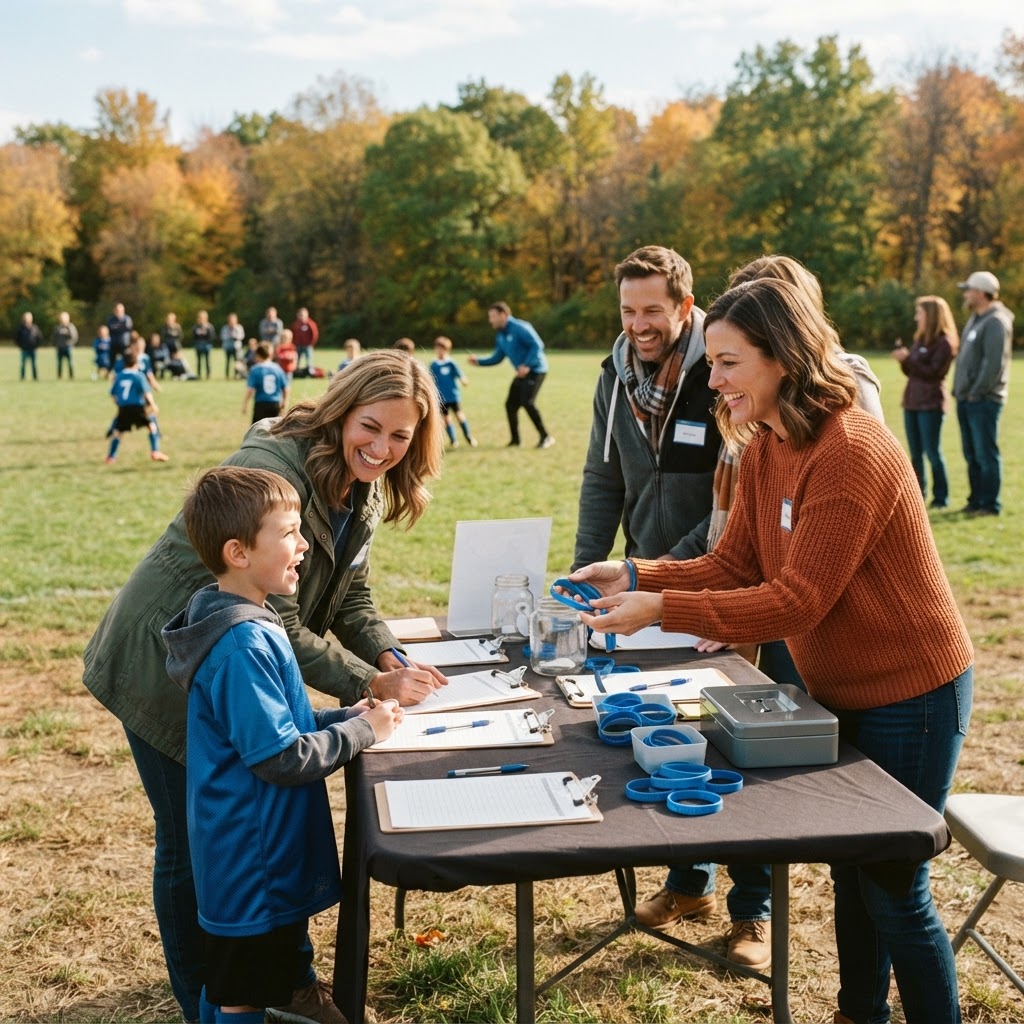
Set up a table at your first scrimmage, back-to-school night, or community event and sell wholesale units on the spot. A physical table plus a real deadline creates urgency that a link alone cannot. Track your total against the goal daily in the final days, thank every buyer, and report the result back to your families so they see the finish line.
A quick word for the supporters you are asking
If you are the one being asked to buy, this is a rare fundraiser where the money comes back to you. Your $60 pairs a wristband or keychain to 6 months of member-only Deals Access, and if you use those savings even a few times on travel, dining, or everyday brands, the wristband can pay for itself while your local team keeps up to $40 of what you spent. Compare that to a raffle ticket you will likely never collect on.
Start before the season does
The groups that fund their fall comfortably are the ones that move in August, while families still have attention and budget to spare. Set your number, link your fundraiser, and give your supporters something they will actually use.
Start your fundraiser today at donacelet.org and have your fall funded before kickoff.