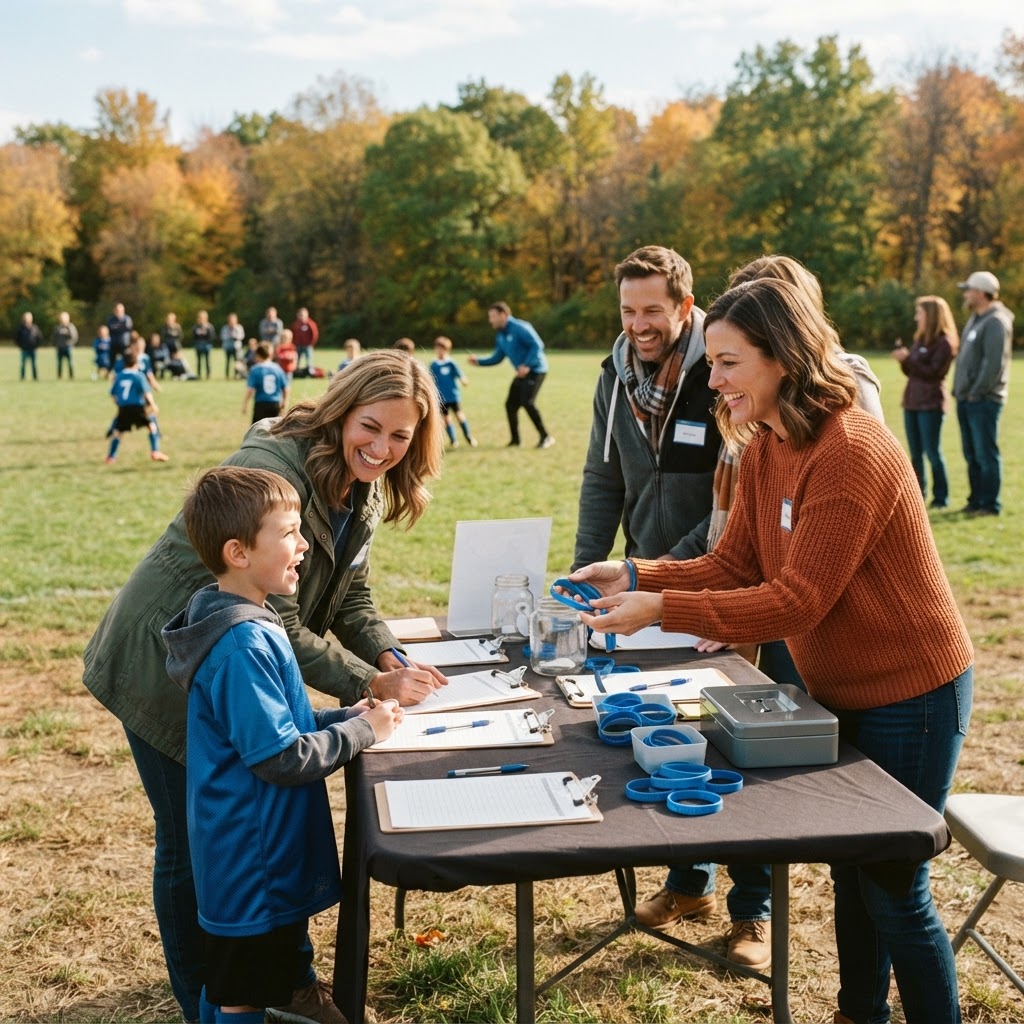

Every fundraiser lives or dies on one number: how many people actually participate. You can pick the perfect product, set a smart goal, and build a beautiful plan, but if only a handful of families do the selling, you will fall short. The good news for groups launching this fall is that participation is a skill you can build, not luck you have to hope for. This guide walks through how to recruit sellers and volunteers who show up, and how to keep them motivated from kickoff to the final push.
Start With the Ask, Because the Ask Is Everything
The single most important fact about recruitment is also the most overlooked. Research on volunteering in 2026 found that roughly 36 percent of volunteers got involved because someone asked them directly, making the personal ask the strongest recruitment lever there is. It outperforms flyers, group emails, and social posts combined. Meanwhile, close to 47 percent of nonprofit leaders say recruiting enough volunteers is a big problem. The gap between those two facts is the whole game. Most groups have a marketing problem in their heads when they actually have an asking problem.
So build your recruitment around direct, specific asks. A message that says "we need volunteers" gets ignored. A message that says "Coach and I would love to have you run the kickoff table on Saturday from 9 to 11, would you do it?" gets a yes. Name the person, name the task, name the time, and make it easy to say yes.
The biggest barrier among people who are willing but not yet involved is simple: they do not know how to get started. Remove that friction. When you pair a supporter with a Donacelet wristband or keychain, the selling motion is already simple, because supporters buy for $60 and get 180 days of Deals Access to the Donacelet Deals Marketplace with 700 plus national brands. Your sellers are not pushing raffle tickets nobody wants. They are sharing real member-only savings, which makes the ask far more comfortable for a nervous first-timer.
Recruit for Roles, Not Just Bodies
People say no to vague, open-ended commitments and yes to clear, bounded ones. Instead of asking for general help, break your fundraiser into named roles and recruit for each one.
A strong volunteer roster usually includes a kickoff coordinator who runs the launch, a communications lead who sends reminders to families, a couple of table captains for any in-person wholesale selling, and a prize or incentive tracker who keeps the momentum visible. Each role is small, defined, and finite. Someone who would never agree to "help with the fundraiser" will happily own "send two reminder texts a week for three weeks."
This matters because flexibility drives retention. About one in three volunteers do not return the next year, and rigid, all-or-nothing commitments are a leading reason. When you offer small roles that fit into a busy family's week, you get more yeses up front and more repeat helpers next season.
Give Sellers a Reason to Care About the Number
Recruiting people is step one. Getting them to actually sell is step two, and it runs on motivation. The most reliable motivator is a goal your sellers helped shape and can see clearly. When a team knows it needs to cover registration, travel, facility fees, and uniforms, and knows exactly what its share of the goal is, the abstract becomes personal. Break the total into a per-seller target so no one feels the weight of the whole thing alone.
Because Donacelet fundraisers are team-level, every dollar raised goes to the specific team or group running the fundraiser, not into a general pool. Say that out loud at kickoff. Sellers work harder when they know the money lands with their own team.
Layer Your Incentives Across the Whole Fundraiser
Incentives work, and the data backs it up. In one fundraising study, 41 percent of participants aimed to become a top seller when incentives were offered, compared with just 28 percent when none were. But the mistake most groups make is dangling a single grand prize at the end. That motivates the two or three natural competitors and loses everyone else. Layer your incentives across three stages instead.
Participation Rewards at the Start
Early on, your goal is simply to get everyone off the bench. Keep these rewards achievable for anyone: a spirit day for the first ten sellers to make a sale, a pizza afternoon once the whole group has paired at least one wristband, a shout-out in the team group chat. The point is to reward showing up, not winning.
Performance Rewards in the Middle
Once the fundraiser is rolling, add rewards that stretch your motivated sellers. Gift cards, group merchandise, or a fun experience like a coaching clinic give competitive sellers something to chase. Make the target challenging but reachable, and post a simple leaderboard so progress stays visible.
Team Rewards at the Finish
For the final push, switch from individual to collective. A celebration the whole group unlocks together when it hits the goal builds teamwork and pulls in the stragglers who do not want to be the reason the group missed. A team activity day or an end-of-fundraiser party works well here.
Recognize People, Not Just Results
Recognition is the cheapest retention tool you have and the most neglected. Poor recognition is a top reason volunteers quit. A thank-you does not have to be expensive to matter. Name your top sellers at the next practice or meeting, send a quick note to the parent who ran the table all afternoon, and thank the whole group publicly when you hit milestones. People who feel seen come back next season, and repeat volunteers are worth far more than a constant scramble for new ones.
Communicate Like a Human, Not a Newsletter
Busy families skim. Keep your fundraiser messages short, specific, and frequent enough to stay top of mind without becoming noise. A good cadence is a clear kickoff message, a reminder or two each week with the current total and the next milestone, and a warm closing thank-you. Text and group chats beat long emails. Every message should answer one question for the reader: what do you want me to do, and by when.
Make the Selling Itself Easy
Motivation fades fast when the task is a hassle. The lower the friction, the higher the participation. With Donacelet, sellers can share online and let supporters buy a wristband or keychain through a referred link, and groups earn up to $40 per referred sale. For groups that want to sell in person, wholesale units are available at $15 each for orders of 100 or more, which lets your group sell them for up to $60 apiece for up to a 75 percent margin. Either way, the sale is a real product with real member-only value behind it, which makes it something your sellers feel good about sharing.
Put It All Together
Strong participation is not an accident. Recruit with direct, personal asks. Offer small, named roles instead of vague commitments. Anchor motivation in a clear, team-level goal, layer your incentives from kickoff to finish, and recognize people every step of the way. Do those things and you will end up with more sellers, more repeat volunteers, and a bigger check for your team.
Ready to give your sellers something they will actually be proud to share? Start a fundraiser at donacelet.org and link your group today.